Everything Is Always On Offer — Which Is Why Nobody Pays Full Price
Photo: Reinhard Kirchner, CC BY-SA 3.0, via Wikimedia Commons
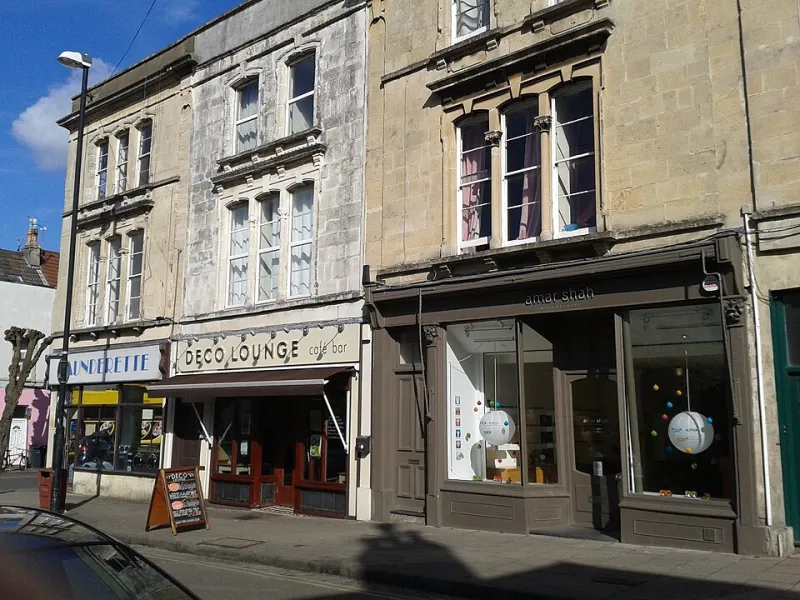
There's a shop on a high street I walk down most weeks with a 'SALE — up to 50% off' board in the window. It has been there so long it's part of the fixtures. People walk past it the way they walk past a bus stop. Not because the stock is poor — because everyone has quietly worked out that whatever is in there will still be half price next Tuesday.
The sign stopped being an event years ago. Now it's wallpaper. And wallpaper doesn't sell much.
That's the trap with always-on discounting. It feels like a strategy — it's visible, it's busy, the numbers move in the short term — but it's really a slow leak. It takes a while to notice you're standing in the wet.
The maths you can't argue with
Discounting gets discussed in terms of 'driving traffic' and 'staying competitive'. Rarely in terms of what it costs to make the same money.
- Take 10% off and you need roughly 11% more volume just to stand still.
- Take 20% off and it's about 25% more volume.
- Take 30% off and you need around 43% more sales to break even on gross profit.
- Take 50% off and you have to double your units — with the same rent, the same hours, the same postage, the same you.
That's the bit people skip past. A discount doesn't come out of revenue, it comes out of profit, and profit is the small number at the end that pays you. A 20% cut rarely means 20% less take-home. It's usually far worse than that, because the extra orders bring extra packing, extra returns and extra admin with them.
Three leaks, not one
The margin leak is the obvious one. The attention leak is the one that eats your week — every blanket code needs building, testing, promoting, answering questions about and then honouring after someone forgot the end date. The trust leak is the one that does lasting damage: if your full price is only ever a staging post on the way to a deal, your customers learn that your full price isn't real. They stop believing the number and start waiting for the version of you that's panicking.
Once that lesson is learned, it's very hard to unlearn. The customer who waits isn't disloyal. They've simply been trained, patiently, by you.
Why it feels impossible to stop
Because stopping is scary. Turn off the code and orders dip. The dip is real, and it arrives before the improved margin does, which is why most detox attempts last about eleven days.
The other reason is comparison. You're up against retailers who can run at cost for a fortnight and call it a strategy. You can't win that race, and you shouldn't try. Your advantage isn't a deeper cut — it's being a person someone can ring up, a delivery that arrives when you said it would, a product chosen for a reason rather than for a spreadsheet.
The detox, in five moves
1. Pull the last twelve months and look at profit, not revenue. For each promotion, write down what happened in the two weeks after it ended. If sales fell off a cliff once the offer stopped, the offer wasn't building anything — it was renting.
2. Write down your floor price. The number below which you'd rather not take the order. Put it somewhere you'll see it. Most discount decisions are made in a hurry on a bad day; a written floor makes that harder.
3. Retire the blanket code. Replace permanent offers with things that have edges: a start date, an end date, a minimum spend, a named product, first-time customers only. Rules are what turn a discount from a habit into an event.
4. Give every offer a reason. 'Because it's the last week of November', 'because these are the last of the small sizes', 'because you've bought from us three times'. A reason makes it feel like a decision. No reason makes it feel like a shrug.
5. Say what's included. If you're not discounting, the value has to be visible somewhere — the packaging, the speed, the free advice, the fact that someone answers the phone at 4pm on a Friday. If all you've ever sold on is price, you have some storytelling to do, and that's fine. Start now.
Timing it around Christmas and January
Mid-November is the honest moment to do this, before the promotional noise hits full volume. The temptation is to match every Black Friday email that lands in your inbox. Don't. Pick one genuine Christmas moment, run it properly with a clear end date, and make it good enough that people notice it's different from the other fifty things in their inbox.
Then plan January deliberately rather than by reflex. A January clearance is a perfectly respectable thing to do — as long as it's actually clearing stock, has a closing date, and doesn't quietly become the price you charge until March. The distinction is simple: a sale with an end is a story. A sale without one is a subsidy you're paying to your least loyal customers.
And if you sell services rather than products, the same logic holds. 'We've held our prices for two years' is a stronger message than a permanent ten per cent off, and it doesn't cost you anything to say.
The awkward bit
Someone will ask why the code has gone, or why the price looks higher than last time. Keep it short and unapologetic. 'We've stopped running year-round offers — it means we can keep the quality where it is and keep answering the phone.' That's a complete answer. No essay, no wobble, no 'sorry to be a pain'.
The wobble is what undoes most of these plans. A customer pushes back, you offer them something off to smooth it over, and the training programme resumes.
What it looks like three months in
Orders may dip a little. Profit usually holds or improves. Returns tend to settle down, because people who buy at full price tend to have decided they want the thing. Your inbox gets quieter in the good way. And your price stops being a negotiating position and starts being a fact.
That shop with the permanent sale board could take it down tomorrow and nothing much would change, because the sign hasn't meant anything for years. The businesses that do this well don't shout about value. They just quietly stop apologising for their prices — and let the rest of it do the talking.