Your Trestle Table Is a Focus Group: What Christmas Fairs Reveal About Your Marketing
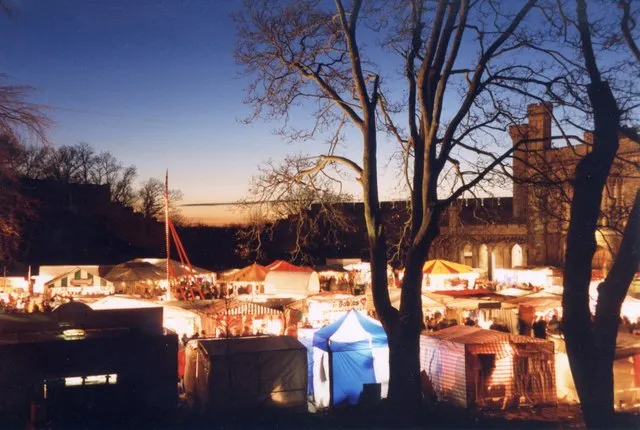
Photo: Jo Turner, CC BY-SA 2.0, via Wikimedia Commons
Christmas fairs have a way of making marketing feel wonderfully simple. You turn up, put out the mince pies, arrange the stock, and wait to see what happens. But the best small businesses treat that trestle table as something more useful than a sales counter. It is a focus group with fairy lights. A live landing page. A very British experiment in whether people understand what you do before they have had their second coffee.
This season, as village halls, school gyms and late-night shopping events fill up with stalls, resist the urge to judge the day only by the till total. Watch how people behave. That is where the useful stuff lives.
Watch the approach before you watch the till
Stand back from your stall for five minutes. Not to check your phone — to see what strangers do. Do they slow down? Look confused? Walk past and then double back? A stall with no clear signage asks people to do too much work, and most will not bother.
The same is true online. If your homepage needs a paragraph of explanation before someone understands what you sell, your festive stall is probably doing the same thing in physical form. Count the number of people who stop, the number who ask a question, and the number who pick something up. Those numbers are more useful than a vague feeling that it was “quite busy”.
Footfall is not the same as interest. A packed church hall can still be a dud if everyone is heading for the cake stall. Note where people enter, which way they drift, and whether your position helped or hindered. Then ask yourself: is your website easy to find in the places your customers already are, or are you relying on them to wander past?
Your pitch is a ten-second homepage
At a stall, you get about ten seconds to answer three questions: what is this, who is it for, and why should I care now? If your answer starts with a long history of the business, you have lost them. If it starts with “we’re a bespoke solutions provider”, you have really lost them.
Try a few versions of your pitch over the weekend. One sentence, plain English, no jargon. Then watch what happens. Which version makes people lean in? Which one leads to a follow-up question? Which one gets a polite nod and a step backwards?
The phrase that works at the table is often the phrase you should use at the top of your website. Not because it is clever, but because it is clear. Write it down exactly as you said it. That is copywriting, even if you did it while holding a paper cup of tea.
Pricing tells you what people need to hear
Festive shoppers are honest in a way that email subscribers rarely are. They will pick something up, turn it over, and put it down without explaining why. Your job is to notice the pattern. Are people asking about delivery? Do they assume the price includes something it does not? Are bundles doing better than single items?
You do not need to slash prices at the stall. You need to hear the question behind the question. If three people ask whether something is handmade, your marketing may be underselling the effort. If people keep asking about sizes, your website probably needs a clearer size guide. If bundles sell well in person, test a starter bundle online in January 2027.
Keep a simple tally. Not a spreadsheet that needs its own licence — just notes on your phone: common questions, objections, compliments, and the thing people kept picking up but not buying. That last one is often a pricing or positioning issue, not a product issue.
Follow-up is the test most stalls fail
A stall can generate goodwill and then lose it in the car park. The follow-up is where the marketing actually happens. If you collected email addresses, did you ask permission clearly? Did you give people a reason to hear from you? Did you mention what they would get — early access, a local delivery window, a helpful guide — or just thrust a clipboard at them?
A QR code to a simple sign-up page is fine, but test it yourself on the day. If it takes more than a few seconds, people will give up. A paper list is also fine, as long as someone can read the handwriting afterwards. The point is not to build a massive list. It is to build a list of people who actually want to hear from you.
Follow up quickly, but do not send a generic “thanks for visiting” message that sounds like it was written by a robot with a mince pie. Mention the event. Mention the thing they asked about. Keep it short. One useful email beats five festive reminders.
Turn notes into January 2027 changes
By the time the decorations come down, the details will blur. So before you pack away the fairy lights, spend twenty minutes turning stall notes into three specific changes. Not ten. Three.
Maybe your homepage headline needs to match the sentence that worked at the table. Maybe your local search listing needs updated opening hours and a photo of the actual stall, because people kept saying they did not realise you were local. Maybe your email welcome message should answer the question you were asked most often.
This is also a good moment to check your Google Business Profile. Add the Christmas fair as a post if it is relevant, make sure your category is right, and ask a couple of happy customers for a review while the experience is fresh. Local search rewards the businesses that look alive and specific, not the ones that last updated their profile in a previous decade.
Keep the lab coat on
The Christmas market test is not about turning your stall into a corporate research project. It is about paying attention. Every confused look, every repeated question and every person who said “oh, I didn’t know you did that” is a clue. Collect the clues, make a few small changes, and carry them into the new year.
You do not need a big budget to learn from a weekend stall. You need a notebook, a bit of honesty, and the willingness to admit that the sign you thought was obvious was not obvious at all. That is not failure. That is marketing, done in public, with tinsel.